
 01248 353 595
 Quality materials
Liquid Screed
Concrete
Liquid Screed That Delivers a Level, Ready‑to‑Lay Surface
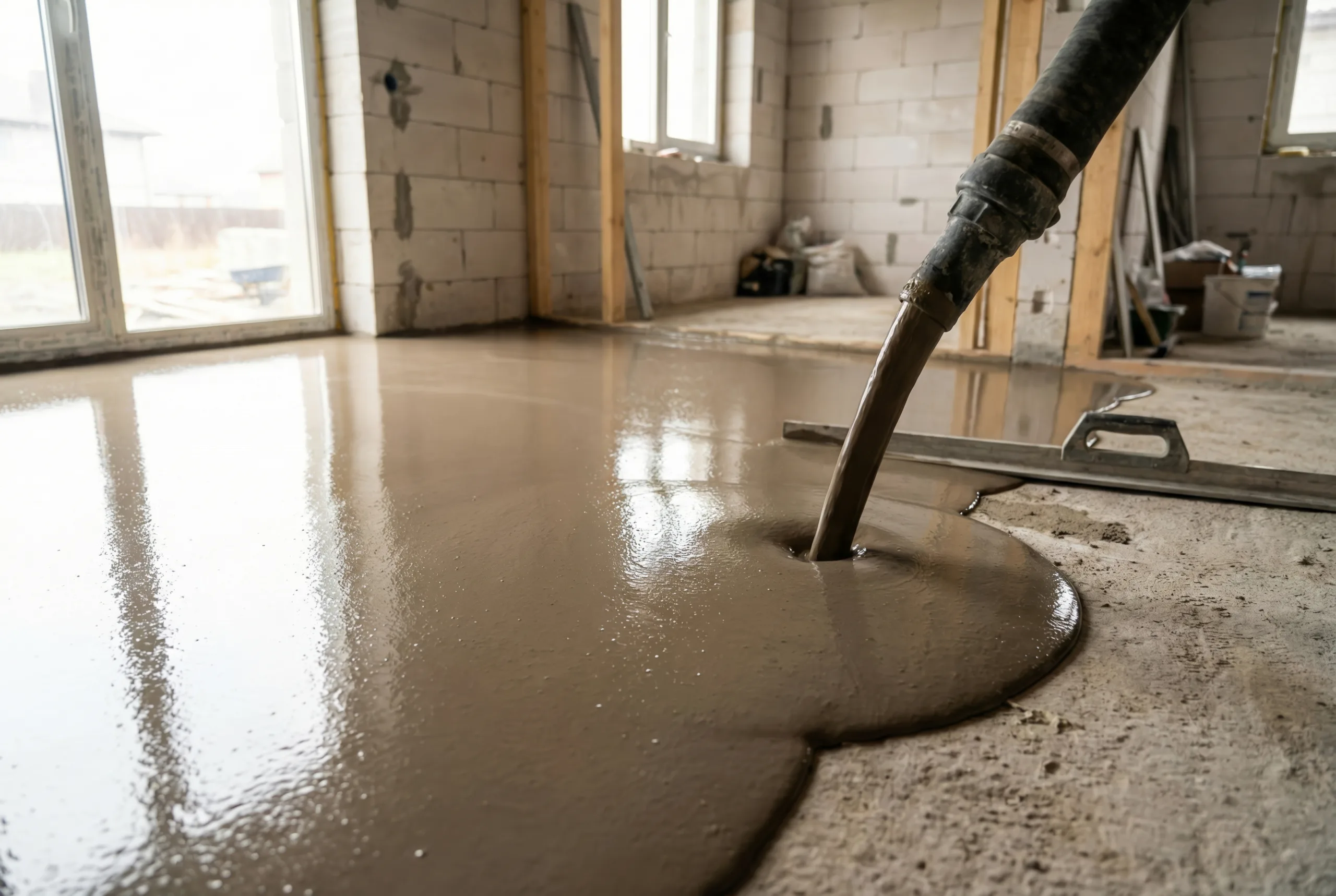
Hogan Concrete’s MasterFlow range is an anhydrite‑based liquid screed, designed to give that consistent, high‑performance result every time. It is supplied only through Hogan‑approved contractors, so you know the preparation, installation, and curing are carried out to the required standard.
Anhydrite liquid screed flows to self‑level, delivers excellent thermal conductivity for underfloor heating and uses a binder with a lower carbon footprint than traditional cement‑based screeds.
The result is a smooth, durable and more sustainable base, ready for your chosen floor finish.

Features
Self-Levelling
Anhydrite liquid screeds self-level when poured, creating a smooth surface without the need for extensive manual labour.
Rapid Drying
Anhydrite screeds typically dry faster than traditional cement-based screeds, allowing for quicker installation of floor coverings.
Thermal Conductivity
They have good thermal conductivity, making them suitable for use with underfloor heating systems.
Flexibility
Anhydrite screeds can be applied in various thicknesses, depending on the project requirements.
Environmentally Friendly
Anhydrite is often considered more environmentally friendly than cement, as it can be produced with a lower carbon footprint.
FAQs
Is liquid screed better than 4:1 screed?
Liquid screed is often the better option for fast, level floors and underfloor heating, but traditional cement screed is still preferred in some applications.
Liquid anhydrite screed is pumped, self-levelling and gives a very flat finish with less labour and faster installation.
It offers better thermal conductivity than sand-and-cement, so it works particularly well with underfloor heating at reduced depths.
It has low shrinkage, which helps to reduce the risk of cracking when correctly designed and installed.It is, however, sensitive to moisture and is not generally specified for wet rooms, showers or areas with standing water.
Surface laitance must be removed, and compatible primers and adhesives must be used, as not all flooring products are suitable for direct application to anhydrite screeds.
Cement-based screeds are widely used and compatible with most floor finishes. They perform better than liquid screed in wet or externally exposed locations, but they take longer to dry and are more prone to shrinkage-related cracking.
What is liquid screed?
Liquid screed is a pourable flooring screed that’s pumped into place to give a flat, level base ready for your chosen floor finish. Because it flows, it gets into every gap, wraps around underfloor heating pipes and needs far less hand trowel work than a traditional sand and cement screed.
Hogan Concretes range of Masterflow screeds are anhydrite-based screeds. Anhydrite liquid floor screed is a type of floor finishing material made from anhydrite, a mineral that is a formed of calcium sulphate. Overall, anhydrite liquid floor screed is a popular choice in modern construction for its efficiency, speed of application, and favourable performance characteristics.
What is the difference between liquid screed and dry screed?
Liquid screed and sand-cement (dry) screed are both used to create a level base, but they perform differently and suit different types of projects.
Liquid screed is pump-applied and a free-flowing anhydrite-based mix that self-levels.
Sand-cement screed is laid semi-dry and levelled by hand. It is a traditional blend of sand, cement and water.
Liquid screed is poured, dappled and quickly achieves a flat, consistent surface with minimal manual finishing and high daily outputs.
Sand-cement screed is more labour-intensive, slower to install and relies on the installer to achieve levels.
Liquid screed dries more quickly and can be walked on or covered sooner than dry screed. It reaches floor-covering readiness more quickly at lower depths.
Sand-cement screed generally needs longer to cure and dry, which can extend the programme.
Liquid screed offers better thermal conductivity and fully surrounds UFH pipes, improving heat transfer. Sand-cement screed has lower thermal performance and a higher risk of voids around pipework.
What is the minimum depth for liquid screed?
For most jobs, liquid screed is laid to a minimum thickness of 35-50 mm. The exact depth depends on the product, the subfloor and whether theres underfloor heating in the buildup.
As a rule of thumb, underfloor heating usually needs sufficient cover over the pipes or cables to provide good strength and heat transfer, which is why most systems sit in the 40-50 mm range overall.
Hogan Concrete can also supply self-levelling screeds that go down much thinner, where you just need to take out minor variations rather than install a full-depth screed. The final answer should always come from the data sheet for the screed youre using on that project.
Where can I find approved contractors?
At Hogan we have a preferred list of approved contractors who we have quality controlled to ensure they can follow the system optimally. Please contact one of our team today who will be able to price and supply information, on 01248 353 595 or email saleshogan-group.com
Need Liquid Screed For Your Next Project?
Fast response. No chasing. Real people. Real service.